Showing posts with label advice. Show all posts

Thursday, 8 June 2017

Consequences of Owning the Witch Title.

Considering that witchcraft has this dark misconception about it would you be outspoken about it?

I am. Because only through people recognizing you as a witch, seeing and knowing what you do and who you are will allow for the world to see us as what we are: a force of nature, wise women and men. 

Some witches might be afraid of discrimination or being feared, one of my now ex-boyfriends left me when he found out about my condition. 
Even worst my sister's first boyfriend left her coldly with a letter stating that as she was a "sinful" witch he could not risk his "salvation" by dating her as the "judgement day" was near. (this was 5 years ago by the way).

Circe, by John William Waterhouse

But also good things have comed out of being honest. The owner and manager of the first company I worked at felt it was very mature of me to embrace my way of life and being straightforward about it. I helped people that were raised in closed minded and restrictive cultures / religion to question some beliefs and think for themselves and it also helped people that felt the instinctive call for the craft to ask questions and even start practicing witchcraft. 

Every action has a consequence, but to let fear lead our decisions is not a good idea. Same goes for being gay or lesbian. We might suffer discrimination sometimes as many women do, or people with different racial backgrounds other than caucasian. But you know what they say, what doesn't kill you makes you stronger. 
Maybe that's why I've always found women wiser and more reliable. 

Why do we tend to focus on our few differences when the things that unite us are much more deeper and significant? We all feel and bleed. We all share the same sky and the same ground. So basically try not to judge someone before meeting them no matter what color they eyes are, whom they love or what they wear. Love and cooperation are stronger than fear and hatred. So set an example with your actions and be true to yourself. At least that's what I believe and practice.   

Monday, 29 May 2017

The Powers and Abilities of Your Spirit.

The spirit, the soul, our energy... We talk about those terms frequently but... Up to what point do we actually know what they are, what they do? The spirit bursts in the deepest level of consciousness, it's the capacity to place oneself before the cosmos and  philosophize about the existential features of the human condition, aka, the meaning of life and death, the final destination of the world, why are we here, etc. 

It complements the emotional and the logical aspects of our self and it deepens experiences such as to love another person, to get immersed in a project you are passionate about, and helps to give meaning and sense to our acts.

Mother Earth, by Jaison Cianelli.
In order to get closer to our spiritual self we must understand the powers it grants us, no matter our religious beliefs. The following are a synopsis of the spiritual habilites recognized by what some philosophers, psychologists, and developmental theorists refer to as Spiritual intelligence.

Sense and meaning;

The spirit enables people to seek meaning, since it emerges from the depths of our being as a primary need. But from its experience of being unfinished, the spirit is always searching.

I believe there is an intimate relationship between happiness and meaning, because it directly affects the way of perceiving one's existence. Only a person who has the experience of living his/her everyday  life , in a meaningful way, enjoys a subjective perception of inner well-being.

I thin the fullness of a life depends on how one has used the time he/she has received as a gift.

Questioning Beyond limitations;

The spirit gives power to formulate ultimate questions of existence.

Such as why was I born? What is the point of my existence? What will happen after my death? Why do we suffer? Why do we struggle? What is worth living for? What is worth doing? How should I make sense of my existence? Etc.

The spirit wants to know the WHAT about things.

Taking perspective. Distancing;

It means to separate, to distance oneself, but still be. In doing so, one can see things in perspective, and can see itself from a distance. Only in this way is one able to think for oneself. And then you know that your center is out of this world, that you belong to no-one.

I am in my body. I control and dominate it. At the moment of taking distance, passion advances without limits, pushes fear away and expresses its inner world.

After years of trying to understand this I believe it means to live at a certain distance from the body, just and necessary to not be dominated by it while still being conscious of it and using its energies and possibilities. This power not only distances oneself from the environment, but also from ideas, convictions, beliefs and values. Allowing people to see them in perspective, to question and criticise them, and relegate some of them them if necessary.

I think that the spiritual power of taking distance is the only way to really understand something.

Self-transcendence;

Transcending means going beyond any border, not being a conformist, to keep moving forward.

The power of transcendent expresses a lack but at the same time a hope. This capacity empowers the human being to move towards the unknown. Transcend to open up to new perspectives, it is not the will to colonise or control, but the desire to overcome.

To transcend means, in some way, to shed the banal and the predictable, and to delve into the essential.

We are settled in a place, in circumstances, but at the same time, we aspire to do something that we are not yet, but we believe we can become.

Our nature as human beings evokes transition, a path or itinerary towards what is not yet. It is the motor of human life, the vital impulse that moves you to go beyond, to overcome any limit, to enter new worlds to live fully and intensely, thus enjoying reality in a more intimate way.

Love;

Love is the cause of life and what keeps it moving. Love is the sign and the justification. So love it all.

Laziness? Shake it off. Just strive, make an effort. Nothing more than this. And you will have justified your life. Empower and improve yourself, and you'll have already reformed the world.

The amusement;

It is one thing to exist, another very different thing is to be aware that one exists.

A caterpillar exists, but does it know it does, that it enjoys this wonderful possibility? I don't think it experiences the surprise of existing, nor the vertigo of temporal flow of life.

It is one thing to look, another thing is to admire reality. Which is closely linked to taking distance.

To admire and to be amused are a mental and emotional experience, they affect the corporal and physical but has its root in the spirit.

I thin it is so amazing that when you are aware that you are alive, and may not exist, then is when you recognise the ephemeral nature of one's being. You experience a surprise and you are led to love life and to enjoy it intensely, to turn your being in the world into a project.

And the world ceases to be obvious, banal and known, and we start perceiving it as it is; Deep, mysterious and enigmatic.

To be aware of oneself;

One of the spiritual powers empowers us for self-knowledge, mingling with intrapersonal intelligence; This enables "awakening" and openness. Thus I realise that not only I am and not only I live, I know of my being and my life.

Providing a double opening towards the interior (knowledge of oneself) and to the outside (the knowledge of things).

The human being inhabits a self-aware self and capable of contemplating the world, a free self that, by virtue of its freedom, can configure both its body and its soul.

Assess and value;

The spirit also serves to value. Assess and make value judgements about acts, decisions and omissions. Valuing is about identifying the assets and evils that a particular decision has generated in the past. For this it is basic to weigh, to observe the effects that it has had for oneself and for others.

Values ​​not only motivate progress in the field of knowledge. They are not merely responses of our feelings, but motives in a new sense. They demand a certain position of will.

What I decide at a given moment will determine not only the configuration of the life of that moment, but will be relevant to what I will become.

I find very curious how any decision creates a willingness to make a similar decision again. In this way that I become "( a violinist, an athlete, a doctor...)", or not, is something that is in the hands of my own freedom.

The call of values ​​comes through the spirit and this moves us to explore unknown territories and to perform amazing movements. This shows that the human being is an open work, a being that has the possibility of finishing himself.

To sense beauty;

A spiritually sensitive being finds delight in natural beauty, artistic manifestations and the simplicity of small things. It is able to detect beauty and enjoy it without pretending to possess it. It contemplates deeply the expressions of beauty that appear in reality, which allows him to enjoy more intensely the fact of owning life.

Sunday, 2 April 2017

Reading the Signs of Nature: Divination.

Crows by Marion Rose 
  Have you heard the phrase: Everything happens for a reason? I am not sure till what point this is true, intuition and premonition are tricky sensations as we are pushed to mistrust them by the current worldview. Nonetheless I have come to learn to trust my intuition over the years. Interpreting the signs of nature and the universe, as witches and shamans have done for generations,  has turned out to be both useful and easier than expected.
  The divination arts have always caused a great controversy, specially since charlatans and fortune tellers go around deceiving people's trust. As witches we believe that the only thing that exists is the present. So what are we predicting then? The answer is something a bit bigger than what the future holds, it's about the destiny we have created with our actions, thoughts and feelings. Basically it's an energy that has already been created but that has not yet manifested in the present. 

   Everyday life is full of examples. Have you ever found yourself thinking about an old friend that you haven't seen in a long time and then, all of a sudden, you meet them or receive a phone call?
 As far as I know the "science" behind  all divination processes lies on what Swiss physiologist Carl Jung denominates as synchronisation, term that uses in his work over the I Ching (a traditional Chinese method of divination), conducted in 1949.
  The synchronisation process becomes aware of events in time and space, revealing a sense beyond mere chance. That is, a specific inter-response between specific events. (As tossing a coin in the air to predict the future like on the I Ching to create a pattern). Synchronisation is found in the heart of all divination techniques, Whenever you lay out a tarot deck, or interpret the future using runes, wax or viscera, a pattern is created which reflects an internal condition that is already forming, or is about to.
To read the signs of nature, and divination through experiences with animals works exactly the same way, with the advantage that is more organic and intuitive than other methods. At the time of your encounter, the pattern is appreciated through the habits and characteristics of the animal, the folklore and mythology as well as the circumstances that surround your experience; the health of the animal, your feelings about the experience as well as any personal idea or association that you might have about the animal.

Intuition plays a fundamental role in divination, especially that related to animals. Socially there are certain attributes traditionally associated with a certain animal such as loyalty in the dog, power in the lion or transmutation and change in the butterfly. But we should by no means limit ourselves to these concepts. We can use them as guides, as bases to develop meaning but, above all, let your intuition guide you.

Most of the time we overlook this signs, even once we've learned how to interpret them. We don't often pay attention to them or decide to ignore them... I went on a date last summer with a lovely guy, I was quite excited and on the middle of the day I found a dead dove on the street, I didn't want to believe it and completely ignored this sign, and guess what, our relationship didn't last more than twenty-something days... The Dove, universal sign of peace and love appears in the art and folklore of numerous spiritual traditions, religions and cultures. I am not suggesting that you put an abrupt end to any relationship just because you found a dead dove. Remember to take into account the context and holism of the situation.

Here are some pointers to help you understand the meaning of your encounter:
1. Consider your initial reaction (you attract animals according to your deepest beliefs about the animal, as well as your way of seeing and understanding the world and yourself
2. When did it happened? Day or night, the hour o the day, the season you are in...
3. If the encounter was in the habitat of animal (less rare) or in a different one (more significant).
4. How did you feel? Usually the emotions are the direct link of the meaning of your encounter.
5. The person or people with whom you were at the moment of the encounter.
6. What activity where you doing?
7. Symbolism and possible meaning of the animal:
TRANSFORMATION - Butterfly, Frog and Snake.
ROMANCE, SEXUALITY and LOVE - Horse, Swan and Rabbit.
MESSAGES - Owls, Dragonfly and birds in general.
LOYALTY and FAMILY LOOSES - Dog, Elephant.
CREATIVITY AND EXPRESSION - Spider and sparrow.
JOY, PEACE, FORTUNE and PROSPERITY - Dove, Hummingbird and Lady Bug.
INTUITION, MAGIC and SHAMANISM - Raven, Wolf and Fox.
SPIRITUALITY AND HEALING - Dolphin, Bee and Deer.
POWER - Bear, Lion.
INDEPENDENCE AND LONELINESS - Cat and Iguana.

Monday, 20 March 2017

Spring Wishes.

As grams says: In with the new and out with the old! Springtime is finally here which means to usher in projects, fresh starts and opportunities.
These are my wishes for the year: I want progress, more balance, and romance.

So as tradition dictates, let's take an intrapersonal look at the things I am most grateful for as well as the aspects I'd like to improve about myself. You can also do this to align your thoughts, feelings and actions with the energy of this day to aid you achieve your goals. And can use my list as an example, if you wish. 

I don't know about you,
but I am feeling 22
I love my happy vibe, especially when people tell me that I brighten up their day just by being there.
On the other hand I think I should  stop avoiding conflict all the time, and be a bit more outspoken.

I am very happy with myself because I have finally come to terms with discipline and have been able to balance my exercise, healthy eating, studies, job and personal life in a responsible manner. And though I've improved a lot, there is still a lot of room for getting more experienced and mature. 

I think it is great that I am honest, assertive and confident. Though I wish I had bitten my tongue on certain occasions. I guess I should think more before spiting words out of my mouth. 

I'm delighted that I have finally stopped falling in the dick sand (that is to forget about yourself and your priorities when any guy pays attention to you just because you don't want to be single.) I have grown a lot when it comes to love and relationships in the last year. Now I can say that I've learned to be single. And I am open to a relationship. But I am not desperate anymore, basically I will welcome love if it knocks on my door but I won't lose my mind if it doesn't. 

I've always been a pretty green person, but I do want to enhance my ecological ways even more, by consuming less processed food and bake my own bread or make my own ice cream, for example. To keep on experimenting with natural cleaning products for both my own personal care (with clay, essential oils. organic natural soaps and vegetable oils) and my housekeeping (using vinegar, bicarbonate, lemon and essential oils.) Also on my clothing, by looking carefully that they are made from natural and responsibly sourced materials.

On the professional area I am quite content with my current position, it is allowing me to save some money before I start university. I just hope I will be able to add that into my personal scheme so that I can balance my studies on top of everything else without stressing out too much.


I believe that is everything for this Spring... I hope all your wishes come true as well. I know they will (if you work for them!) ;)

Wednesday, 8 March 2017

The Book of Shadows.


The Books of Shadows are famous for rising numerous legends.

It is already a fact that they are a sacred object for witches as they represent something more than a family book, something more than wisdom: They symbolize a living channel where each written knowledge transcends the boundaries of time and space -almost like a way of speaking directly with those who do not yet exist as part of our essence will be impregnated forevermore in our Book of Shadows-.

Perhaps this is the concept that aroused the allusion to protective spirits...
The Tubilda's Book of Shadows,
photo taken by Paula Montañes

Traditionally the witches' knowledge were transmitted orally, and passed down from generation to generation. So there was no need to record the information in a book, until the time of the persecution that is. It is believed that it was then that the first Books of Shadows were written, so called because they were born protected in the darkness, sheltered in the shadows, and because the eyes of the "uninitiated" were not to see it, nor even to know about it. 

Now, by custom, it is still called Book of Shadows although some witches prefer to call it Grimoire. Normally each lineage has a single Book of Shadows written by its members, although some also have an Initiate Book (with the basic knowledge). As for writing it there is no fixed or correct way to do it, since each lineage has its own customs.
We understand that what is a reality today it might not be true tomorrow, so we always introduce, check and update new knowledge. 

A belief only lives as long as someone believes in it, a lifestyle only exists as long as someone practices it. That is why it is so important to us to continue with the tradition, and transmit it to the next generation. Always in a tone of guidance of course, that is to explain everything from a personal point of view and sharing ideas without ever imposing them. That is why the witches of each lineage have the responsibility of writing their Book of Shadows and contribute with their own energy and creativity to develop and guide the next generation.

If you would like to write your own Book of Shadows I'll share some tips that have worked for me. You don't necessarily have to be a witch to write one. I guess we can see the Book of Shadows as a generational history book that puts emphasis on passing down knowledge, advice... It can contain anything that transmits some sort of wisdom, from an ancient tradition to a homemade recipe. It all starts with an idea. 
These books have the advantage of being open when it comes to content, structure and design.

Before beginning to write the book I recommend to have a previous idea: if it is going to be organized in chapters; If it will be ordered by categories, by degree of difficulty ... As well as content; Will it be a didactic book; Of research or, perhaps, an encyclopedic one? About what, and how many, things will you write?

 I advise the following to write your book as it is working for me!

· Make a mini-scheme where you write down the main idea that you want to transcribe. In the process of writing is much easier than it seems to get your creativity overflowing and we end up relegating the idea that we want to reflect on the background and writing about unrelated things. So I think it is better to try to keep it simple.

· It is very useful to take into account the purpose for which you write and the people who are going to read it, to suit the level of knowledge and the age of the readers. This way the communication will flow more easily.

· Finally just review the text, make sure it has the structure you want and if there is a conclusion. Check your spelling and make sure you take care of the presentation. It is completely normal to rewrite and retouch many of the things you write, in my opinion, it is best to let the writing rest a night or two before checking it. Even better if you can get someone else to read the text and see what they understand and whether they find it interesting or not.

Saturday, 4 March 2017

Spring Equinox. Time of Balance and Renewal.

We are finally in March, which means the expectation and countdown for the equinox is also in the back of my mind. I love Spring. After the dark, cold winter. Days get longer and longer as they approach the spring equinox and on the special day. Both day and night have the same length. From that point on, light hours increase until reaching the longest day of them all in the summer solstice.
Irises by Vincent van Gogh

 The March equinox marks the moment the Sun crosses the celestial equator –the imaginary line in the sky above the Earth’s equator– from south to north. And indicates the first day of Spring. This happens on March the 19th, 20th, or 21st every year.
According to the Universal Coordinated Time, the March Equinox, this year, is on Monday, 20th of March 2017, at 10:29 UTC.

 Traditionally, the spring equinox, evokes renovation and rebirth of wisdom and fertility. It's a day to celebrate life and joy. Eggs, seeds and the rabbit are symbols of this day. The first two represent all the new life and the last one is one of the animals that by that time comes out of its burrow. We can see how some of this symbolism has been carried out on other cultures. As Christians use eggs and rabbits around the same time in a celebration they call Easter. While, among pagans the equinox is known as Ostara. Ostara is the name of an ancient Germanic divinity of spring, Goddess who embodied dawn and the awakening of germinative forces. It means something like "rising sun."

 The Tubilda celebrate life and use the awakening energy of spring by doing some purification rituals. We cleanse ourselves, our homes and our energies by, first of all waking up when the sun rises. And drinking a lot of water with lemon! You can do some exercise or turn on some music to bring up those good energies and, after breakfast, it is time for a deep cleaning of the hole house. Basically, everything in the house is thoroughly cleaned and we also get rid (recycle or donate) any item that we no longer need. The norm is; if you haven't used an specific item for more than a year... It is likely that you don't need it.

Spring is the epoch of beginnings and action. Night and day are practically as long at the spring equinox so it is also time for balance both exterior and interior. Renew and reborn; These are the goals of this day. So we take a closer look into the inside and we make a list of all the things we are grateful for as well as all the things we want to achieve this year. And while we meditate about that we purify our bodies, and then our home by burning the tip of some herbal cleansing sticks and use the smoke to cleanse the house, room by room.
This will energetically mop up any lingering residue within the space. This ancient technique is used to wipe away negativity and stale energy.
Smoke cleansing is a practice that has been around for a long time, though it shouldn’t be confused with smudging, a sacred ceremony performed in many indigenous communities that invites spirit to join them for their rituals. These two words are often used interchangeably, however, they are different. Smoke cleansing uses a variety of dried plants and woods to help cleanse a space energetically, removing bad vibes. The herbs we traditionally use in my family are sage, lavender, eucalyptus, rosemary and bay.

To finish up the tasks of the day we do some gardening. We usually plant seeds on fertile soil, or young trees in a forested area. Or even small plants in pots in the garden or window sill.

Afterwards the day follows as any other good party would, with a reunion of friends and family, a banquet, festive mood and celebration music and decoration where flowers and water are the protagonists. 

Are you also excited for springtime?  

Thursday, 2 March 2017

Beauty is Perception. Critique of Social Beauty Standards.

What do you consider beautiful? Do you feel comfortable on your body? For some reason there is this current obsession on achieving unrealistic standards that puts pressure on both woman and men, but specially on the first ones. Which just creates unbalance and increases stress and obsessive behaviors. Even fear to ageing, which is a natural process that occurs to every living being. 

Mona Kardashian, or Kim Lisa?
To undergo surgery procedures or develop an eating disorder are common things in our society. 

And I ask myself... What kind of life are we living if we are so focused on our external self that this obsession obscures anything else? How can we find peace if we are prompted to pursue an impossible, and changing, trend based on our body image? Beauty is conceptualized by each culture, and era, differently. So let's learn to love ourselves the way we are. Because we will always find someone that finds us ugly. Yes, despite all the make up we might wear or our body type.  But there will also be someone that thinks we are gorgeous. Of course, I am talking about acceptance. Not about resignation. If there is a physical aspect that you can work on like getting fitter or taking care of your skin to get rid of afflictions like acne. Then that is perfect, do all you can to feel comfortable in your skin and don't feel ashamed on your way there because there is no such thing as a standardized perfection. 

We can break this cycle by ignoring it. Let's stop judging (ourselves and others) based on the external appearance. And let's create a new idea of what is beautiful.
Have you ever stopped to think of why we look like we do? Well it's all about genetics. Half of it comes from your mother, and the other half from your father. At the same time your parents are half their parents and so on. So in the end our looks are a reflection of all our ancestors. Plus the choices that compound our individuality. The things we connect with. So learn to love yourself the way you are.
Once I read that a spiritually sensitive being finds delight in natural beauty, in artistic manifestations and in the simplicity of small things.Also, that he/she is able to detect beauty, and enjoy it, without pretending to possess it. Taste deeply the expressions of beauty that appear in reality, which allows you to enjoy more intensely the fact of owning life.It is beautiful what springs from the inner psychic need. Beautiful will be what is inwardly beautiful.

Saturday, 25 February 2017

Nutrition. The Thing that is Keeping You Alive.

Food. If you think about it our lives revolve around food. I don't know about you, but I am always looking forward to my breakfast, and then lunch and dinner. Also all major events of our lives turn around food as well; birthdays, weddings, even funerals.
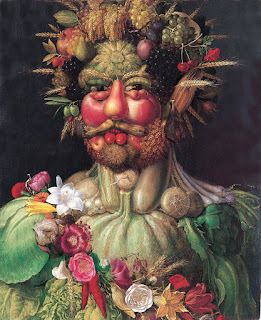
The Roman God of the Seasons,
by Giuseppe Arcimboldo 
Nowadays is very easy to get something to eat, we just comfortably walk to the nearest shop, supermarket or, even, vending machine. But in the past people had to work very hard to get a single meal. In the case of vegetables, people had to grow them, plant them, care for them and safeguard them from a variety of plagues and weather conditions, recollect the fruits and vegetables, clean them, cook them, conserve and store to use in the season in which those specific plants don't grow. 
When it comes to animal produce, they had to hunt, fish or raise the animals. And once they'd manage to find and catch them, they'd had to flay, clean and prepare the meat before even been able to cook and eat it.  

It is great that most of us are no longer restricted to those activities in order to acquire the food we need to survive, but as we've given up the responsibility to grow our own food we have also forgotten why we eat (to nourish ourselves), we have lost the sacred aspect of food as well as the knowledge of the one thing that is keeping us alive. 


For the first time in history, without considering great catastrophes such as wars or a mass disease, the life expectancy of the next generation is shorter than the one of their parents. That is just insane! The report, published in The New England Journal of Medicine, says the prevalence and severity of obesity is so great, especially in children, that the associated diseases and complications -Type 2 diabetes, heart disease, kidney failure, cancer- are likely to strike people at younger and younger ages.
We are slowly killing ourselves, all due to our current sedentary lifestyle and massive intake of processed denatured "food" packed with high doses of added sugar, salt, saturated fats and preservatives, that are completely absent of beneficial nutrients. This situation has gone out of hand. But the good news is that recovering that sacred knowledge is very easy. I am not a nutritional expert but after reading several books on the subject including; Food Matters by Mark Bittman, The Body Book and The Longevity Book both by Cameron Diaz and Sandra Bark and The Great Book of Healthy Living by Txumari Alfaro and Raúl de la Rosa, to name a few. I think I have got some notions, and although I am no expert I will try to explain the basics of nutrition as well as I can:

In my opinion nutrition is not just about food. Because depending on your age, your environment, if you are physically active or not, your genetics, if you have a healthy intestinal flora, your levels of stress, among other factors, will determine the levels of nutrients and calories your body requires. Calories are the energy that each aliment contains, the more active we are the more calories we will need. Broadly there are three main groups of nutrients. 
  • The ones that we need in larger amounts (named Macro-Nutrients) composed of Carbohydrates,  Proteins, and Fats.
  • The ones that are needed in a less greater amount, but are still essential, (known as Micro-Nutrients) which are Vitamins and Minerals.
  • And a third group is Water, and though not really a nutrient, but that also has a direct effect on them, we find Fibre.  
Let's get some more specific details of each of them, shall we?

CARBOHYDRATES 
These are the main source of energy to our body and our brain. Carbohydrates are turned into glucose, a type of sugar, by our bodies and used to provide energy in a cellular level.
Plants make them trough a process called photosynthesis; by mixing the energy of the Sun, water and carbon dioxide from the air. 

Though glucose is a type of sugar, refined sugars that we find on biscuits, cakes, fizzy drinks, and other processed foods, are not nutritious, that type of processed sugar is known as Sucrose.
There are many types of sugar but the following three are te more common: Glucose, Fructose and Sucrose. Glucose is practically everywhere and fuels out bodies, Fructose is the sugar found on Fruits, that is healthy because fruits are also packed with fiber that slows down the abortion of those sugars. Sucrose, on the other hand, adds empty calories to our meals and studies have shown that sucrose sugar bypasses the hormones that tell you're full which means you can overeat without realizing it. Even worst, in order to be processed trough our bodies it consumes B type vitamins, so it is not just empty, it is also stealing valuable vitamins!

Good sources of carbohydrates are whole grains, such as brown-rice, oats or quinoa. Vegetables like sweet potatoes, beetroot, kale and spinach. Fruits, for example, apples and grapefruit. And legumes like chickpeas, beans and lentils.

PROTEINS 
Proteins are strength. They are broken down into amino acids by our bodies in order to repair and build muscle. Protein are essential components of body cells and are composed of carbon, hydrogen, oxygen and nitrogen.

All the tissues of the body (bones, skin, muscles, organs...) have a group of proteins to perform their functions. Proteins contribute to cell building, growth and repair. The body needs protein to grow and regenerate.

The best sources are low-saturated fat foods like fish, legumes, eggs, poultry, seeds and nuts. If you opt for a vegetarian or vegan diet take into consideration that protein obtained from almost all plants lack one or several essential amino acids, plant sources must be combined with a complementary vegetable to form complex proteins.

FATS
Healthy fats are essential. Fats belong to the group of lipids, are composed of carbon, oxygen and hydrogen. They form a fundamental part of the cell membrane and their role is primordial in the absorption of some vitamins and minerals to keep you healthy. Also, fats help balance our body temperature.

There is this widespread belief that fats are unhealthy and undesirable, so lets re-friend fats, they don't deserve to be treated that way! There are three types of Fats: Saturated (the one we should avoid), Monounsaturated and polyunsaturated fats.

A diet rich in monounsaturated fats, present in vegetable oils (the best is olive), avocados, peanuts and walnuts, reduces the risk of cardiovascular disease.
There are two types of polyunsaturated fats: the omega-3 fatty acids that are found in fish oils. They regulate blood pressure, coagulation and enhance immune responses, as well as keeping a healthy functioning brain, retina and spine. And omega-6 fatty acids, which are found in sunflower, rapeseed and corn oils. Essential for growth, cell structure and maintenance of a healthy immune system. 
Saturated fats, on the other hand are present in coconut and palm oils, although they are more abundant from animal origin derived from red meat and dairy products such as sausages, whole milk, cream or ice cream.
The ingestion of these fatty acids should be limited as they increase the danger of cardiovascular disease.

VITAMINS & MINERALS
Unlike macro-nutrients, vitamins and minerals do not provide energy and are only required in small amounts, but their role is crucial in the normal functioning of the body and in the digestion process. Vitamins are organic, as opposed to minerals which are inorganic substances.

There are many types of vitamins and minerals, with a variety of functions. like keeping your skin, and hair smooth and healthy, Others help you not to be tired and to think clearly.

The main source of them are fresh fruits and vegetables. Make sure you eat a variety of them! And avoid "vitamin drinks" as they are artificially added, the body cannot absorb them and are usually packed with sucrose.
Calcium, vitamin D, phosphorous and magnesium are used to build bones.
Iron, copper, folate and vitamin B12 are the blood formers
Vitamins C, A and E, selenium and beta-carotene are antioxidants.
Thiamin, riboflavin, niacin and vitamin B6 keep you from tiredness as thy help transform carbs into glucose.
Sodium, potassium and chloride are the hydraters.    

FIBRE, 
It is actually a type of carbohydrate, but humans cannot digest it, but it is great at aiding our digestive track exercise. It balances cholesterol in our blood and aids with weight loss. Nullifies constipation and prevents diabetes as it regulate sugar levels, and even helps prevent colon cancer.

There are two types of fibre; Insoluble, known as cellulose, and soluble. The first one helps move food and waste down your digestive system. The second one is absorbed in the body and slows digestion to ensure maximum nutrient absorption.

Fiber is found in whole grains like oats, wheat or barley, vegetables like broccoli, carrots and cucumbers, seeds and nuts, fruits like oranges and grapes and legumes like beans or lentils.    

WATER
The truth is that we owe our existence to water because it explains to the cells of the body how to distribute energy to make it balanced and productive. In fact water performs so many functions that it is consider it to be life in its most intimate essence; Invigorates, nourishes, transports, lubricates, reacts, stabilises, signals, divides, structures and communicates.

The body needs around two litres of water a day to stay hydrated. Make sure to check your thirst. Being thirsty means you have been needing water for a while. Signs of dehydration include: Dry mouth and skin, a blurry mind, headaches, confusion, fast heartbeat and weakness.

Make sure you drink a lot of water right after you wake up, since the body hasn't got any for, at least, 8 hours, drinking it will revitalize your hole body, it is a great morning ritual!. Remember, the best source of water is water. Not energy drinks, lemonade, coffee, tea, alcohol nor fizzy drinks!     

Thursday, 23 February 2017

A Natural Home.

I love visiting my friends houses, so many aspects of our personally are reflected in our rooms! Apparently adolescents have messy rooms as a reflection of their boiling hormones in the inside. Harmony with nature is one of my greatest ideals and, of course, if you know me you can tell it is also reflected in my home.
White Oak,
photo taken by Darius Tubilda
A natural home reflects a healthy relationship with the environment and a balanced life style. So let me share some tips to enhance the natural energies in our homes;
Always make sure that the house where you live and its furniture are made from ecological building materials; Since they have the advantages of being less polluting, healthier (as they don't release noxious substances) and are more pleasing to the senses and our spirit.

Adobe, stone, brick, bamboo wood and gypsum are healthy and environmentally friendly materials because they require little energy in their production (compared to their synthetic substitutes like aluminium and steel). But to really fulfil their ecological function, their place of origin must be as close as possible to the retailers as it avoids - or diminishes - pollution and energy consumption produced by transport.

We have to be very careful with the type of paint and the varnishes. Since the chemicals they have give off toxic vapors over the years, compounds capable of generating serious disturbances in those who inhale them.
Luckily there are natural paints made from resin that, after drying, they can be washed and they maintain a great capacity of absorption and diffusion. Or mineral paints such as the ones made of lime and silicate; these have porous (allowing a perfect breath of the wall), and are resistant to pollution, fungi and bacteria and can also be washed.
Chemical varnishes emit toxic gases for a long time and denature the materials in which they are applied. So our best option will be to use varnishes proceeding of natural oils (composed of flax-seed oil, castor oil, balsam and pine resin, ground pigments and citrus peel distillates).

Also we have to take into account the fabrics we use - in clothes, sheets, curtains, etc. - organic and natural fabrics are much better: wool, cotton, linen, silk ... since they allow perspiration and are free of toxic substances. And we will avoid clothes that are resistant to wrinkles, that repel stains or water, that do not need ironing or that do not shrink as they are synthetic.

Building insulation is also important. Some healthy and ecological options- as long as they are local products - are:
Cotton, cellulose, cork, fiber of hemp or coconut, wool, linen, wood or straw.
In plumbing it is very important to avoid plastic materials derived from chlorine, such as PVC: they are harmful to our health and to the environment, and very dangerous in case of fire.

As well as the materials it's important not to bring chemical toxins whit our cleaning products. A very easy to make (and economic) homemade recipe for natural cleaning consists in mixing soda bicarbonate,  distilled white vinegar and water. It is great as a multipurpose cleaning solution and you can always add a few drops of essential oils such as pine or teatree to add aroma and extra disinfecting properties. Without jeopardizing your health nor the people you love.

Wednesday, 22 February 2017

Lessons Learned About Love, Sex and Relationships.

Love, oh love... As the song goes: All you Need is Love! Everybody wants to be loved, to find that someone special. And yet we know very little about love and everything that comes with it: sex, relationships and romance. How come something so vital, something as basic as love isn't taught in schools?
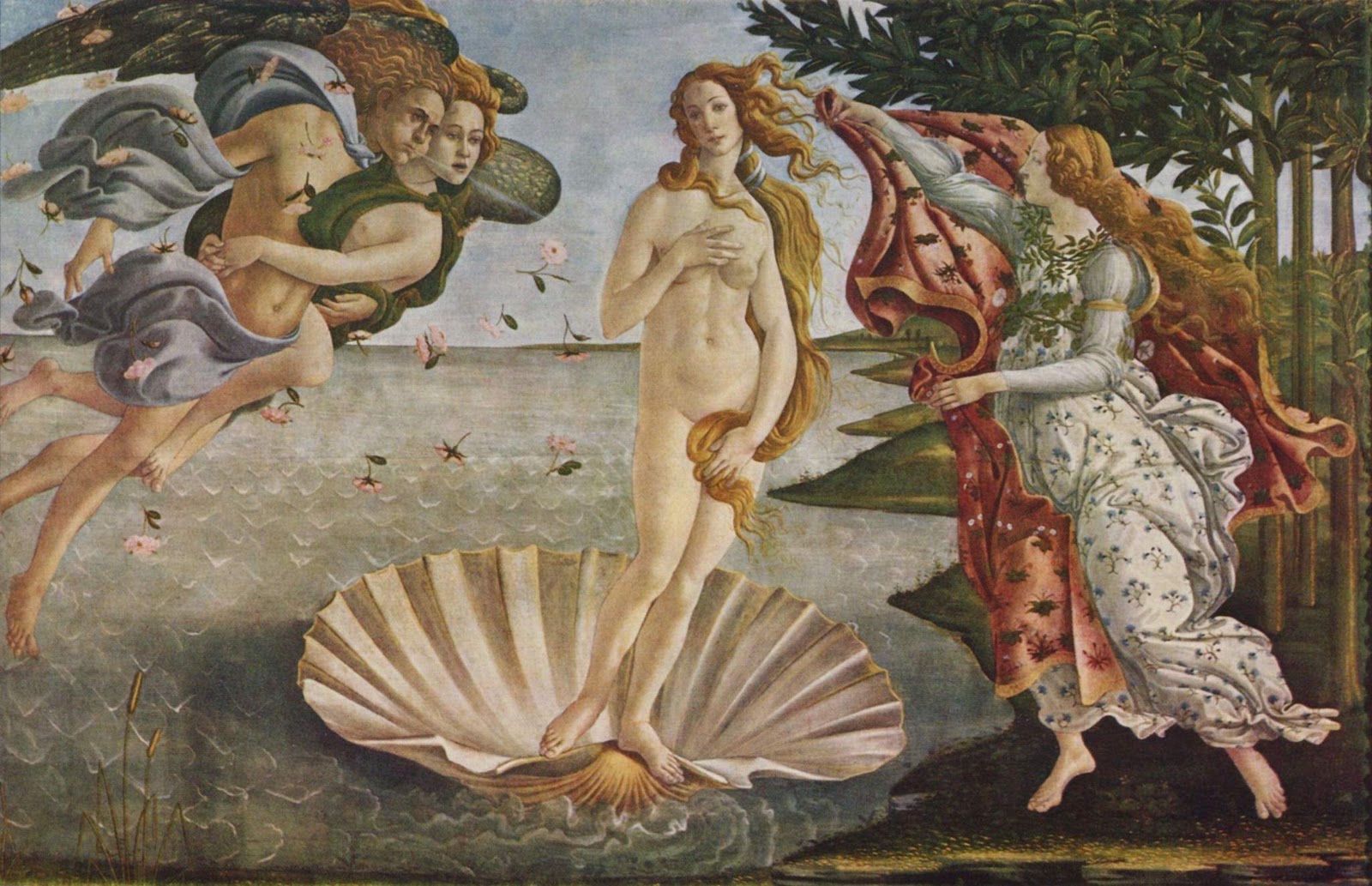
I believe, if we had more information, everybody would enjoy better, healthier, relationships. Redundant as it might sound, I love love and anything that symbolises it, rose quartz is my signature crystal and I always liked the Greek Goddess of love Aphrodite, named Venus for the Romans. So it's a subject I enjoy getting my hands on.
The Birth of Venus, by Sandro Botticelli
First of all, before looking for someone to live with and start a relationship, I consider essential to know yourself first. And once we are well with ourselves we will have more chances to find someone to build something together. In my opinion, there is a mass false belief that exposes that we are halves who need another being to be complete and happy, that we must find our other-half in order to feel fulfilled. I honestly think such a theory is absurd. It creates feelings of dependence in your partner which can easily lead to anxiety and stress. Each of us are whole and complete people, and are able to be perfectly happy without a partner. One of my youngest sisters (she will turn 17 on September) is quite worried about never finding a partner... Actually, looking back on my teens I felt the same way. Perhaps influenced by the impact the media has over us, or maybe because in the olden times the life expectancy was much shorter and thus people had to have children at a younger age (Romeo and Juliet were 15 and 13 respectively). So let me share some of my experiences concerning love and the things I've learned over these years;


Have you ever fallen in love? I have. The first time; I was 14. I could lose myself in his eyes, and listen to him all day long. He was the first person I though of in the morning and the last one before going to sleep... He was a straight friend from high school, so nothing really happened between us...
But I learned that it is very important to be true to yourself and to let go, despite how painful and difficult it might be, when facing unrequited love. 

Not long from that I met the first guy who ever asked me out, I wasn't interested though. But instead of being clear I played around with him just to get attention, which I regret doing now. I have learned that a clear no. Is much better than a diffuse response or ghosting someone. 

I was 15 when I engaged in my first formal relationship and had my first kiss. It was awful by the way; Really slimy and oppressive. For a good kiss, I think it is important to make sure the other person knows what your intentions are, looking at someones mouth and getting close to their face is a good way to do that. Approach him/her a 90% and let the other person do the 10% left. When it comes to the actual kiss, just go with the flow. Experiment, and be honest, get to know yourself and your partner to find out what you both enjoy the most. 
He was the best-friend of the previous guy (uncomfortable I know) whom talked trash about me, and eventually he cheated on me...

I felt hurt, and lonely so I started going out with the first guy who paid any attention to me. I didn't even liked him on the first place, he did some really weird stuff with a Pikachu plush... and he dumped me once he found out I am a witch. This short, but intense, relationship taught me two major lessons. The first one: never neglect your standards and don't start a relationship out of spite. And second: It is much better to be alone than in bad company. 

Then, at age 16, I met a Spanish journalist, if I remember properly I believe he was 22 at the time. We dated for a year but it was mostly carnal. He was nice to me, but whenever I proposed to do something a bit more romantic he would excuse himself saying he was busy. In our anniversary I got him a poem book I knew he'd like and he got me some lubricant so that we could have even more sex. That was the limit for me and I confronted him about it. He confessed he was only interested in engaging in sexual intercourse. So I broke up with him, I realised how important communication is in a relationship... if only we would have talked about it earlier!

A month before my 18th birthday I met my, to this date, longest partner, he was 25 and despite his obscure and troubled past he had managed to learn five different languages, had a stable job and didn't fell into addictions or depression. He has a very strong and charismatic personality that made me admire him and at the same time he is so vulnerable, I loved taking care of him. And just a week later, I moved in with him. The place wasn't anything extraordinary but it felt like a palace to me. We burned steps way too quickly but even though our relationship lasted around 4 years we were not compatible on some key aspects that would injured the relationship on the long run. We were practically married, I truly believed we would always be together. But no matter what we tried the relationship didn't work. We were just not right for each other. I have learned that we cannot compromise our future emotions and, that in order to to make a healthy, long term, relationship work love isn't enough. It is important to know the character of the other person to know if we are compatible. And if the characters are compatible, it is necessary to have as referents some values in common, so that the coexistence is simpler in the long run, discussing things that are part of our way of thinking will only create remorse and build negative feelings. Sex compatibility is also important, good sex helps build and maintain couples. Having a good sexual relationship, usually leads to consider a more continuous relationship. And most importantly, to have a common project. Sharing experiences is essential for a couple. I believe living in harmony is not only sailing in the same boat, but paddling in the same direction.

Thursday, 16 February 2017

Teenager Confessions on my Early Twenties.

During adolescence we burst with our emotions towards the outside, an exciting world full of possibilities, but that makes us feel vulnerable; Because we no longer have home's "protective atmosphere", as a teenager we are stuck in between, we are too old for kids stuff yet too young for adult matters. You feel insecure, more focused on what other's think of you than who you really are, you feel rebellious and hungry for new experiences.  

Back on my late teens I did something crazy. Just a month before becoming 18 I moved in with my boyfriend,  boyfriend I had meet just a week prior to that and that was 8 years older than me. 
I knew the truth at 17...

I didn't tell anyone, not my parents, nor my siblings or friends, not even my (back then) boyfriend and owner of the apartment I was moving into. I slowly started to take all of my belongings into his place, and one fine day I appeared with a huge suitcase, a simile and a "honey now we can live together!". 

Everyone freaked out. I don't even remember how everything exactly went,  but surely most of them were shocked. I am so not setting a good example here... I wouldn't do it again and I certainly don't recommend you to copy my behaviour. The point I'm trying to make is that during adolescence the first emotional floods appear, but the tools to confront them are still very weak and the life experience is scarce, so we are prompt to do something crazy without considering the possible outcomes and consequences of our actions.

In the beginning of our independence we are presented with an abyss of difficulties, of efforts and challenges that we will have to overcome, but it is not at all a bad thing.In fact I believe it will make you grow and mature. At least it has helped me. I sincerely believe that you begin to mature when you really take responsibility for yourself and your environment. When you realise that, in reality, it turns out you are not as mature as you thought; But that encourages you to grow and develop even further.

Then you become aware of yourself, immersed in your virtues and your defects, in short; In who you are; Without pretending or hiding and, personally, it is when I have felt more confident. Because you discover a new perception of reality, you know who you are and who you can become and then you know that nothing can stop you. You just need to be you, not what society, your family or even yourself think you should be. Just the real you.

According to neuroscientists, adolescents have extraordinary potential: At age 14, cognitive skills, and especially the ability to learn quickly, are very high. Experts say that teens seem to be more concerned about how others perceive them that how they actually feel about themselves.
Perhaps it is because since birth we are convinced that we are very different from those around us, in childhood we are taught to distrust our feelings because they say they are supposedly irrational, therefore it begins the repression of feelings and we start to interact with others through a "masc" made of a mixture of modesty, because we do not show our true feelings in case they disturb others, and distrust, believing that the less we show of ourselves the less vulnerable we will be.
Concealing our true selves and cutting off our uniqueness.

Something we must learn is to stop being afraid of not knowing and that our conscious decisions, our way of feeling life and our emotions are appropriate. If that's the way you are, it's fine, it's perfect.
In the early age of 14-15, is when adolescents begin to need to distance themselves from their parents and they do so by discussing why they want to do things their way, to be free. According to psychologists this behaviour is necessary to establish a personal identity. Also is where it appears the "disciplined devotion" that arises towards their emerging personal identity and that will shape their future life.

When we are children adults do not seem to respect us too much; We are explicitly told that we must be conformed according to their indications, since we are imperfect and ignorant.
So, convinced that their feelings and their minds are still weak, children give their authority to the adults around them.
And, as they grow, they are constantly seeking the approval of others, apologising for the way we look, hiding our emotions and competitiveness and distrust are the norm. And those brave enough who do not do that and "reveal themselves" as they are end up feeling like fragments loose and shipwrecked in the world...

Parenthood it's very important to me. And when the time comes, I want to treat my children with love and respect so that they are confident and they love themselves and others with honesty. So that they are emotionally intelligent and able to develop and find their passions. And, of course, that they continue to do so as they grow, become teens and, eventually, adults. So let's do it, let's destroy this model by starting with ourselves. By starting to treat others as equals and communicating emotionally and then educate our offspring so that they do not have these problems.

Thursday, 2 February 2017

Tips on How to Learn Another Language.

I don't know if you can tell but English isn't my first language. I started learning English back in August 2011, and I wouldn't say I'm an expert, but I can definitely get by so I thought I'd share some pointers to help you out if you're trying to learn a language, that actually worked for me.

KNOW WHY First of all I suggest you get your priorities right, by that I mean acknowledge where does your motivation come from? Learning a new language is an amazing experience that opens up your horizons and allows you to access new experiences, make new friends, travel and extra knowledge. But it is also a time consuming activity that will require effort and persistence, so make sure you keep up the motivation!

GET ABSORBED  If you really want to learn a language you need to love and breathe it! Travel, or even better, watch TV. Of course, without subtitles. I know, I know... You will probably not understand anything. But you will get used to it eventually. If the subtitles are on, the brain doesn't really focus as much on learning because it is on its comfort zone. It took me months to begin to understand any English, but I watched movies I had seen before, so I already knew what was going to happen. When you are a bit more confident start to read books, even if you only understand half of it. 

TALK Practice even if it is just with yourself. I used to repeat the words I heard on television to myself, it is not like my pronunciation is perfect or anything, but is close enough, to the point that people can never guess where I am from! I know it can be a bit embarrassing, but go on and talk to as many people as you can, nobody learns without making mistakes first, and only a fool would make fun of you for making a mistake.

STUDY Get some basic grammar books, keep a journal and jot down any new words or expressions, the opportunities are everywhere. If English is the language you are trying to learn, probably you knew that "jot down" means to write something down based on the context, so it is always good to annotate these words and/or expressions and look up the meaning if you aren't sure. 

GET HELP Doing something is always more enjoyable if you share it with someone else, whether it is from a friend that learns the language with you and helps you in the low motivation points. Or from a teacher, in fact I am going to recommend Simon, a friend that has always helped me with my English. He is a teacher licensed in English Philology and Literature. I believe he might be available for Skype lessons, so send him an email to simon_carle@hotmail.co.uk if you are interested!


Good luck expanding your horizons! Can you think of any more advice to learn a new language? I am currently studying German, so danke for reading!

Monday, 30 January 2017

In Search for Happiness.

At 9, visiting the acuarium.
When people talk about their objectives or goals in life, most will say something like "I just want to be happy". A lot of people want to become happy; to find happiness, and no matter what they do it always seems far away. This is because happiness is not something you need to get or win. What joy can exist in the present if you can always get a better car, better clothes, be fitter, have a better job, better relationships, etc. So happiness is always away, always in the future. 

Happiness is something you feel, it's within you, here, now. In the present.

Happiness as defined by science, is the absence of serious genetic deformations. Poets think it is beauty itself and philosophers define it as the absence of pain and/or fear. But let's not forget happiness' true nature. An emotion
By defining happiness as an emotion, I am suggesting that, like all emotions, it is ephemeral and therefore the first person to reach unhappiness will be the one who intends to be happy all the time. We must change our conscious attitude toward emotions.  We continue to think that happiness or unhappiness, joy and misfortune depend on others. When I believe that the secret of happiness lies within ourselves.

We can actually create more suffering in our lives by trying to avoid or suppress difficult emotions. As the Buddha said "Life is suffering". It sounds horrible I know, but life is not just suffering! It's also wonderful! Personally, I think the Buddha's philosophy is a reminder that life is not, and should't be just easy, comfortable and pain free. We need to accept  that death, heartbreaking, frustration, sickness, disappointment and fear are also a part of life. 
Try to embrace imperfection, to let go of this belief that life should be a certain way. Open your heart to uncertainty. Since I started to do that I don't fight or ignore negative emotions anymore, instead I embrace them, because I know that they are here now, but that they will go. And it's also a healing experience that makes happiness and all the other positive emotions all that much better. And the end result is peace, which stays with me always present, Even when underlined by the chaos of all my emotions.

Sunday, 29 January 2017

Being Healthy is Easy if you know How.

Is it weird that I am so into health and well-being at age 22? For some reason literally every single person I meet gives me a curious look, or a whispered wow. So I am going to explain the foundations of a healthy life to demonstrate how easy it is to be healthy.

As the lovely actress, model and writer Cameron Diaz states on her book "The Longevity Book"; the best way to live fully is to live healthfully. So the first thing you need to be healthier is information. Let's start by defining what health is, the answer is very simple. Health is the natural state of any living being and disease is the consequence of a rupture of that natural harmony. And to recover it and/or maintain the health you have to do something very easy; To start you must have the will to do it. A healthy life is the one that puts the means to support the natural resources and defences of the organism in order to keep us in balance. Being healthy is basically doing all the things we love doing! Eating (Nutrition), Resting (Sleeping), Interacting with others (Socialising), Moving (an Active life, Fitness) Creating (project/career you are passionate about) the environment (in and outside our home) and Managing stress (meditation, hobbies, contact with nature...). Whenever you do any of those things the benefits are practically miraculous, and aid your organism at all levels; body, mind and spirit. It is also important to realise that being healthy will not make you invincible, some people justify their unhealthy habits by stating that being healthy doesn't warranty a long life. And of course it doesn't. But it increases the odds. A healthy lifestyle will definitely reduce the symptoms and or duration of any ailments you might experience, or even prevent them from occurring on the first place.

Health is not about unpleasant tasteless food or sacrifice and repression. The truth is that health is about habit, knowledge and gratefulness.

Knowledge because a good health implies knowing the origin and the effects of the food we eat and our actions, once acquired this new knowledge something that used to be a delicious treat, reveals its true colours, and becomes something unacceptable, pure poison.

Gratefulness because, if everyone were truly grateful, wars, conflicts and hatred would disappear. Because when you are thankful for your life, you also appreciate the life of others. And inevitably you stop punishing and poisoning. You respect your own body, your mind, your spirit. You respect nature, you respect the world and all the creatures that inhabit it. Because you thank the gift of life. And thanks to something as simple as being grateful, harmony begins to invade you.

Saturday, 28 January 2017

We Belong to Nature.

It's so sad that one can no longer enjoy a casual picnic at the park or meditate by the sea without encountering litter everywhere. It is unnerving that the world’s predominant view is based around economy and convenience, instead of being formed around life and the one thing that nourishes it: Nature. As it seems logical and natural to me. 

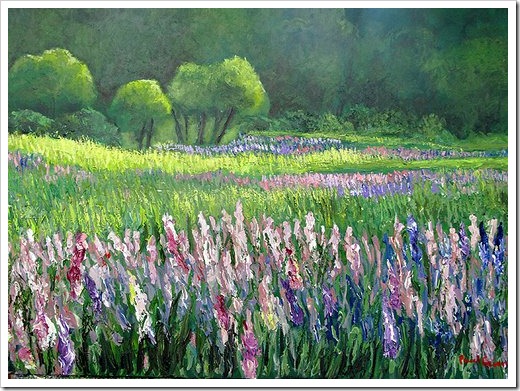
Lupines at Sunset by Paul Crimi
Despite the materialistic perspective that our capitalist culture has instilled in us, we do not own nature at all. In fact, we belong to nature. However, the idea of ​​domination has prevailed in the minds of people for a long time, to the extreme point that we have found ourselves denatured, lost and with a feeling of permanent solitude. Perhaps the most revealing prove of our society's ethical criteria is its relationship to Nature. For example, as geologist Alick Bartholomew points out in his book The Story of Water: "Water has become one of the most effervescent products in the exchange of commodities. To consider Nature as mere "resources" at our disposal to use them as we please is infamous and immoral, as treating water as a commodity or claiming the ownership and patenting of seeds. Water, plants, animals, soil and minerals are much more than inorganic compounds - or organic, in the case of fauna and flora - they are the essence of all things, they are drivers of evolution; they invigorate, energise and empower all forms of life."
Believe supported by the Gaia theory, developed by the American scientist James Lovelock, is that through the cycles of the elements mother nature acts as a great organism. So, if the elements were inert substances, as taught by the current vision, there would be no exchange of energy, therefore making vital processes such as the photosynthesis impossible. 

To understand the above is primordial, as it is the first step to returning to our innate relationship with Nature. There is an increasing awareness for the need to "save the planet," though reality is humanity is the one that needs saving. The environmental impact of humans on earth was accelerated by the discovery of petrol and the Industrial Revolution. Due to a society motivated by domination and competitiveness, which considers itself as an isolated fragment of the environment. And sees nature as an unlimited source of resources. 

Economic growth, unsustainable consumption, acceleration of industrialisation and urbanisation have caused serious damaging impacts on the planet. This increases certain natural catastrophes such as; droughts, floods, desertification, etc. If we continue with our current lifestyle humanity will be doomed. The UN states that by 2030, our health and quality of life will be severely impacted if the contamination and pollution levels remain above the established limits. 

Long story short, returning to our innate alignment with nature is basic and key to life. 

Only through education and a healthy relationship with nature we will be able to rebuild the foundation of a prosperous future in an ecological, economic and social framework. In conclusion, we will remember our innate ability to be one with nature, feel cosmic and with personal energy. This will open the door to a more just, richer and healthier world. 

In my opinion, the best way to achieve this is to connect with our immediate environment. Going out to the park or to a nearby forest to study native trees, learn about local wildlife or the star constellations… to get in touch with our environment. The goal is to know a natural place not only mentally, but integrally. Keep in mind that “to know” is not as half as important as “to feel”. If objective data are the seeds that later produce knowledge and wisdom, emotions and impressions are, instead, the fertile soil in which the seeds grow. I recommend you to read and inform yourself about the one thing that is keeping you alive, it is only in your hands to approach and bind yourself to Nature in the only possible way: entering it and feeling it both inside and outside you.